


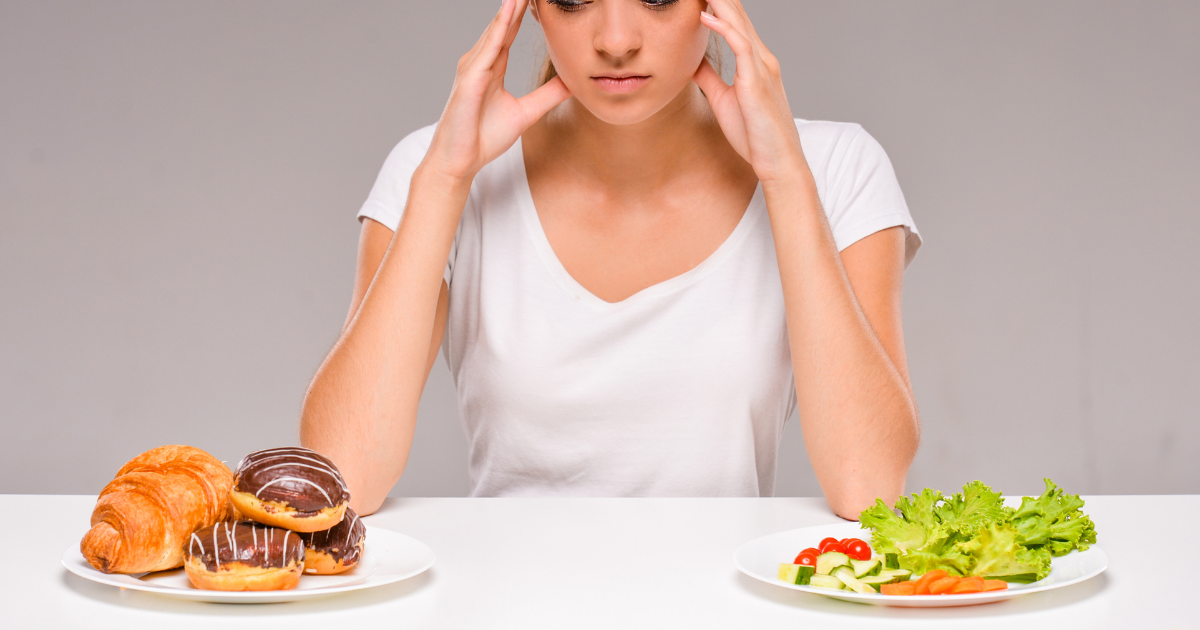
There’s a story a lot of us tell ourselves after a hard season.
It goes something like: I was doing so well, and then things got wild, and now I need to get back on track.
We hear this a lot. We’ve heard it from clients, from people in our community, and honestly, from ourselves. And while it makes complete sense that it feels that way, we want to offer a different way of looking at it.
First: what the internet will tell you
If you’ve spent any time online lately, you’ve probably seen the content. Eat these ten foods to improve your mood. Try this gut-healing protocol after a stressful period. Reset your body with this three-day plan.
It’s well-intentioned (maybe), but it skips something important. It treats eating during a hard season like a mistake to correct instead of like a response to understand.
What was actually happening
When life gets heavy, your body responds. Stress hormones shift your hunger signals. Sleep deprivation changes what sounds appealing. Emotional exhaustion makes cooking feel like one more thing you don’t have the capacity for. Grief, anxiety, burnout, big transitions…all of it lands somewhere, and often that somewhere is your appetite.
So if you were eating more, or less, or differently than usual, it has nothing to do with willpower or discipline. That was your nervous system doing its job. This matters, because the way we talk about food during hard times shapes how we feel about ourselves coming out of them. And shame is not a particularly useful starting point for anything.
What “getting back to normal” can actually look like
We want to be honest: there isn’t a protocol for this. There’s no three-step plan we can give you that will undo a hard few months, and we’d be skeptical of anyone who says otherwise.
What there is, is a return to paying attention. Not in a tracking, measuring, optimizing kind of way, but in a what does my body actually need right now kind of way.
That might look like:
Eating something warm and familiar because comfort is a legitimate nutritional need. Noticing that your appetite is slowly coming back and letting that be interesting rather than something to immediately manage. Letting meals be a little simpler than they used to be, for a little longer than feels comfortable, without deciding that means something is wrong with you.
The goal isn’t to eat perfectly after a hard season. It’s to eat in a way that makes the next hard season a little easier to move through. That relationship with food, the one that’s flexible and kind and not contingent on everything going smoothly, is what we’re actually building toward.
For the mental health professionals reading this
The “I’ve been so bad with food lately” narrative is one of the most common things we hear, and it almost always has more underneath it than it appears.
Nutrition support during and after hard seasons isn’t about getting someone eating “right” again. It’s about helping them understand what their body was doing, and building a relationship with food that can hold up under the weight of real life.
If you have clients who might benefit from that kind of support, we’d love to be a resource. You’re welcome to reach out directly or share our discovery call link with anyone who might be ready to explore it.
The short version
You didn’t fall off track. You went through something. And your body responded the way bodies do.
You don’t need a reset. You need a little patience, a little curiosity, and maybe some support from people who understand that food and life are not actually separate things.
We’re here when you’re ready.