


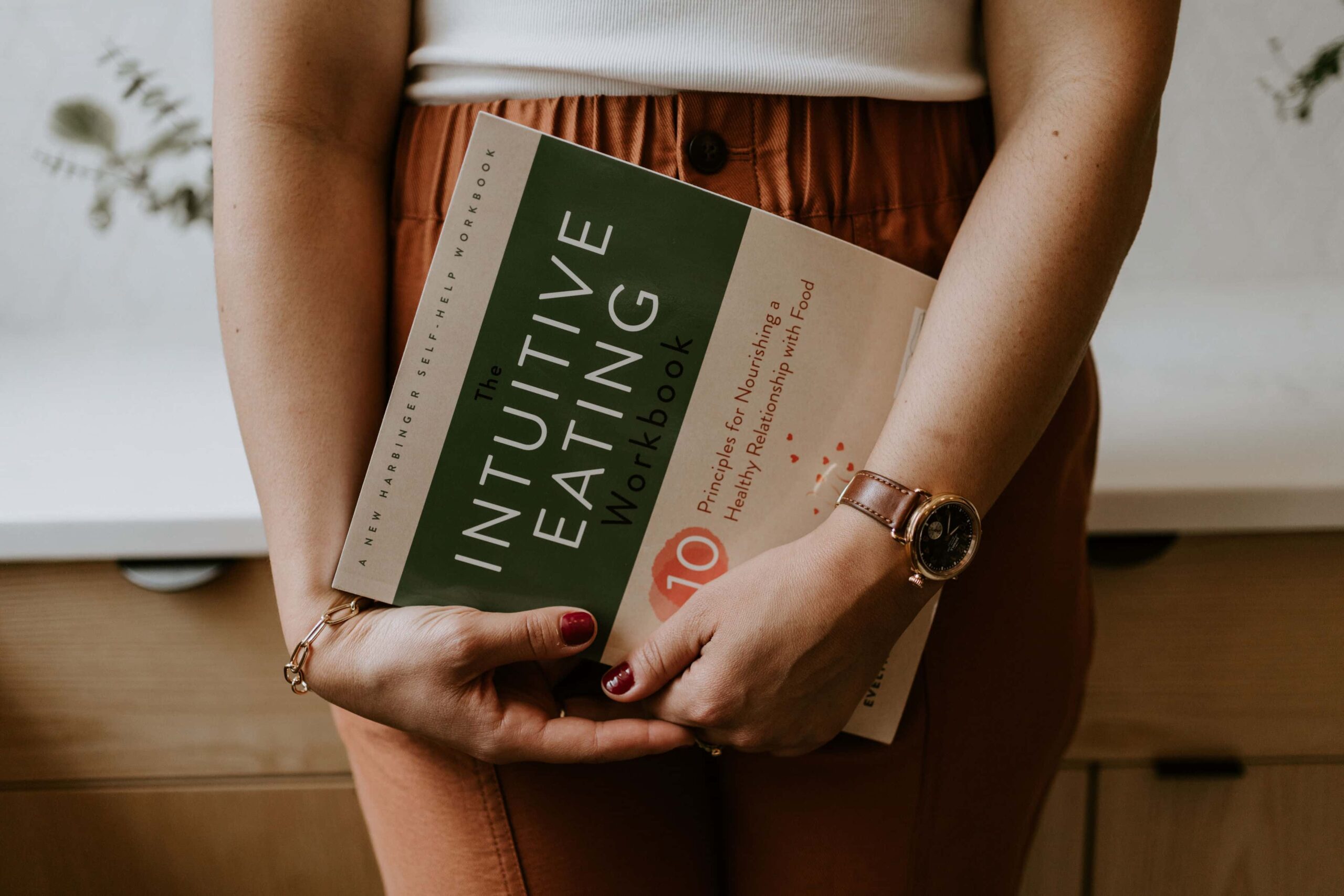
When I first heard the term intuitive eating, I’ll be honest, I didn’t fully understand it. As a dietetic intern, I had spent so much time learning about nutrients, guidelines, disease prevention, and meal planning. Intuitive eating sounded vague to me. I wondered how it could possibly fit into evidence-based practice. I was curious, but at the same time, also skeptical.
How can someone just “listen to their body” in a world where schedules are busy, hunger cues are inconsistent, and many people have medical or cultural food restrictions? The more I learned, the more I realized intuitive eating is often misunderstood, especially by beginners and even by nutrition students like me. It’s not a free-for-all approach to food. It’s a structure that helps rebuild body awareness, reduce food guilt, and create a more sustainable relationship with eating.
Here are some of the biggest things I didn’t understand at first which could be helpful for new clients to know.
Intuitive Eating is Not “Eat Whatever You Want With No Structure”
At first, I assumed intuitive eating meant removing all structure, no planning, no routine, no guidance. But what I learned is that intuitive eating actually allows for supportive structure, especially in the beginning. Many people starting intuitive eating come from years of dieting or irregular eating. Their hunger and fullness cues may feel unreliable. In that stage, gentle structure can help stabilize nourishment while body signals adjust.
This might look like:
- Eating at regular intervals
- Planning meals ahead during busy days
- Keeping easy snacks available
- Using reminders to eat
That’s not dieting, that’s support. The difference is flexibility and responsiveness, not fixed rules.
Honoring Hunger Isn’t Always About Feeling “Very Hungry”
One thing that surprised me was how often hunger cues are subtle, or even hard to recognize, especially in people with a history of restriction. Before learning more about intuitive eating, I thought hunger would always be obvious. But many people experience early hunger as:
- Low energy
- Brain fog
- Irritability
- Trouble focusing
- Feeling slightly off
Not everyone gets a growling stomach right away and not everyone’s hunger shows up on a predictable schedule.
Then, I also started wondering: how do you honor hunger if your circadian rhythm is off, like someone working midnight shifts?
When someone works overnight shifts or has a disrupted sleep cycle, hunger hormones and appetite timing can feel “off”. You might not feel hungry at “normal” meal times or you might even feel hungry at times you were taught you shouldn’t eat.
In those cases, honoring hunger may look like:
- Eating based on waking hours rather than clock time
- Using planned meal and snack intervals during your shift
- Checking in with energy and focus, not just stomach sensations
- Fueling before and during a shift even if hunger feels muted
In other words, honoring hunger isn’t always reactive, sometimes it just means fueling your body before things start to feel off.
That was a major mindset shift for me. It showed me that intuitive eating isn’t about waiting for extreme hunger, it’s about responding to body needs in context, including work schedules, sleep patterns, and daily demands.
What If Someone Already Has Food Restrictions?
This was one of my biggest questions while learning: Can intuitive eating work if someone already has a restricted diet?
The answer is yes, with understanding why the restriction exists.
There’s an important difference between:
- Diet-culture restriction (based on fear or weight control)
- Necessary restriction (based on medical needs)
Intuitive eating can work with:
- Food allergies
- Digestive conditions
- Blood sugar management needs
In those cases, intuitive eating doesn’t ignore the restriction, instead it works within safe boundaries while still building body trust, satisfaction, and flexibility.
It also helped me reframe something really simply: intuitive eating doesn’t mean forcing yourself to eat foods that you know will physically hurt you. If a food causes pain, allergic reactions, or clear physical symptoms, avoiding it isn’t restriction, it’s respect. Most people don’t want to eat something that makes them feel unwell.
When Does “Gentle Nutrition” Come In?
I also wondered when nutrition quality became a focus. If intuitive eating removes food rules, when do we talk about nutrients? I learned that gentle nutrition comes later, not at the start.
A client is usually ready for gentle nutrition when:
- Food guilt has decreased
- There’s less fear around eating
- Restrictive behaviors have softened
- Eating feels more stable and adequate
That is where nutrition guidance fits back in, not as another set of rules, just helpful support. The focus is on feeling good and living well, not controlling your body.
What Changed for Me About Intuitive Eating
As a dietetic intern, I started out knowing very little about intuitive eating. What started off as curiosity turned into respect for how well put together the system of intuitive eating actually is.
It doesn’t reject nutrition science.
It doesn’t remove responsibility.
It doesn’t ignore health.
Instead, it adds something I hadn’t fully considered before: body trust and sustainability.
For clients who are new to intuitive eating, confusion is normal and a ton of questions are expected. After all, learning happens in layers, not all at the same time. That’s exactly how it happened for me too.